

Skating Equipment
Everything you need to know before your skater hits the ice
Whether your skater is stepping onto the ice for the first time or moving into a new program, having the right equipment can make skating more comfortable, enjoyable and easier to learn.
Not sure what kind of skates to buy? Wondering what type of helmet your child needs? Or trying to figure out what to wear on the ice? We’ve put together this guide to help you choose the essentials and understand what we recommend for skaters at different stages.
Coach Ashlee on choosing the best skates and proper helmet for our programs.
Required Equipment
Skates and a CSA-Approved Hockey Helmet are the required essentials that every skater needs before stepping onto the ice.
SKATES
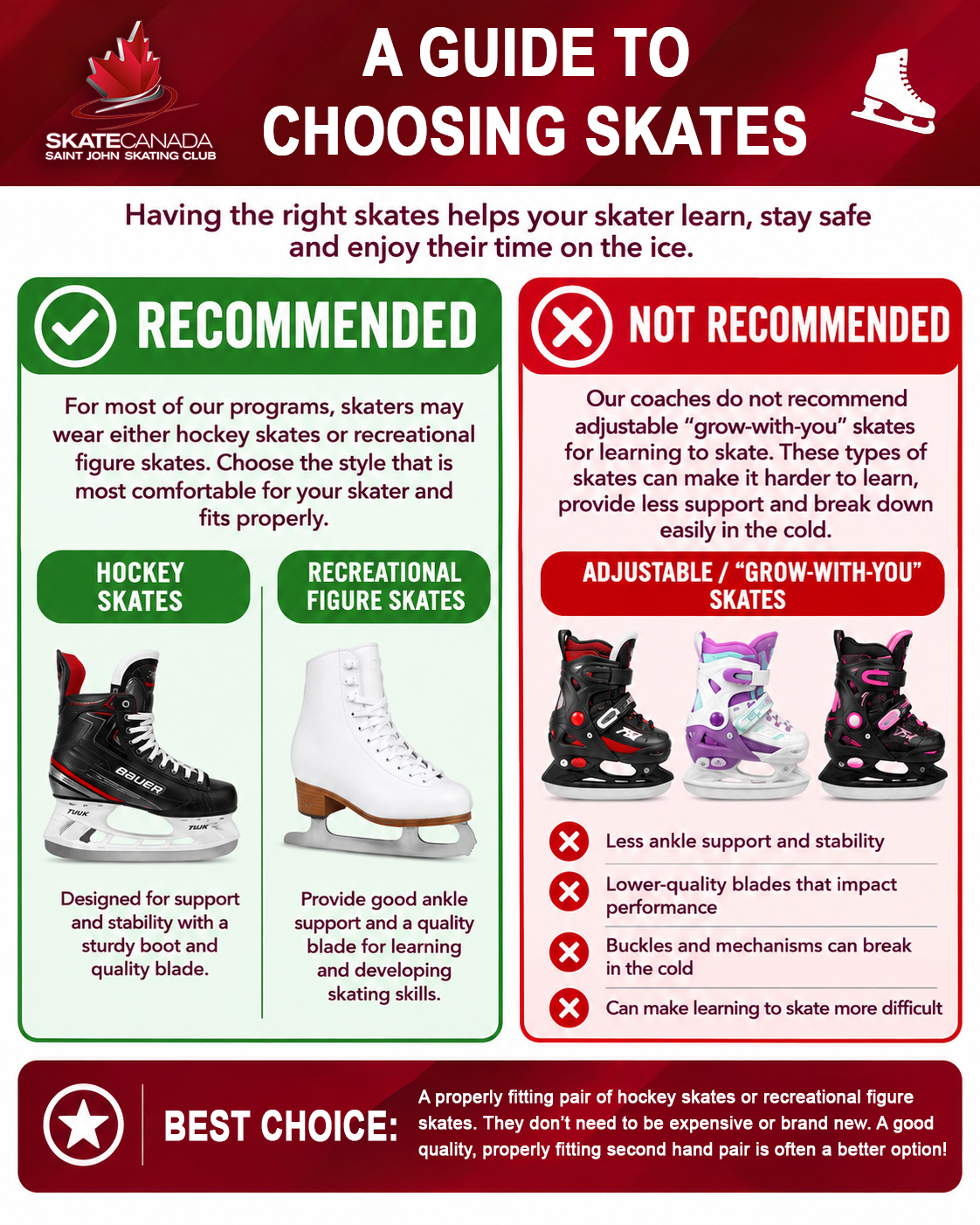
For PreCanSkate, CanSkate, Advanced CanSkate and Adult & Teen Skate, skaters may wear either hockey skates or recreational figure skates, depending on their preference.
Hockey skates are required for PowerSkate. Figure skates are needed for StarSkate.
Important:
Our coaches do not recommend adjustable “grow-with-you” skates for learning to skate. Please read more below in the “What about Grow-With-You Skates”.
New skates do not come pre-sharpened. Even brand-new skates need to be sharpened before they are used on the ice. Please read more below in the “Choosing the Right Skates” and “Caring for Your Skates” sections.
CSA-APPROVED HOCKEY HELMET
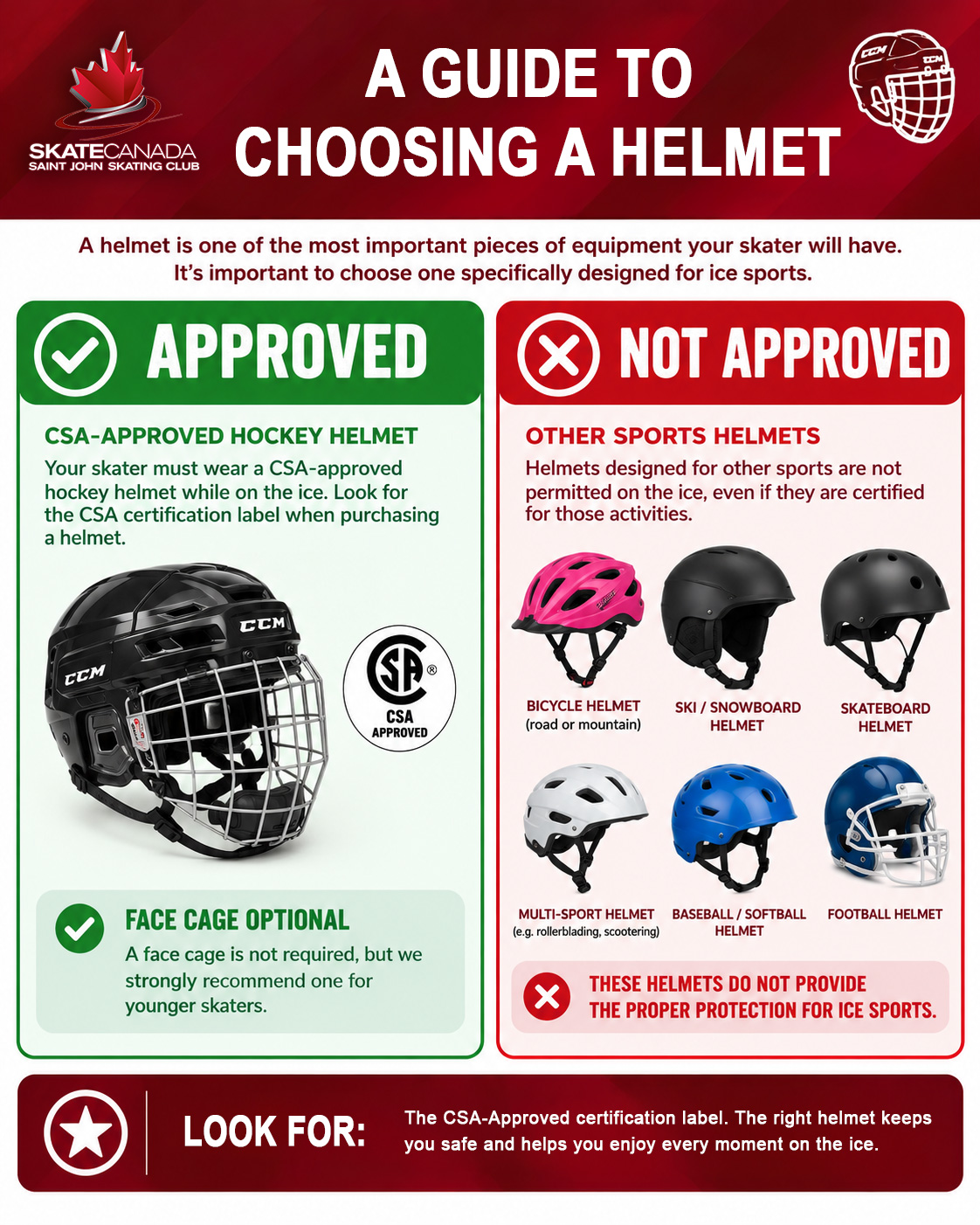
All skaters are required to wear a CSA-approved hockey helmet while on the ice.
For skaters in PreCanSkate, CanSkate, Advanced CanSkate, Adult & Teen Skate and PowerSkate, a CSA-approved hockey helmet is mandatory.
Important: Helmets designed for other sports, such as bike helmets and ski/snowboard helmets, are not permitted on the ice. Look for the CSA certification label on a hockey helmet designed for ice sports.
A face cage on a hockey helmet is optional, but we strongly recommend one for younger skaters.
Choosing the Right Skates
For most of our skating programs, skaters can choose between hockey skates and recreational figure skates. Whichever style you choose, proper fit and support are important.
What Should I Look For?
Snug Fit
Skates should fit snugly without being painfully tight. Your skater’s toes may lightly touch the front of the boot when standing, but their toes should not be curled.
Good Ankle Support
A properly fitting skate should hold the ankle securely and provide the support needed for balance and control.
Properly Secured
Laces or fastening systems should hold the foot and ankle securely without causing discomfort. Avoid overtightening around the toes.
Don’t Buy Too Large
It can be tempting to purchase skates several sizes too large so your child can “grow into them.” However, oversized skates can make it more difficult for a beginner to balance, control their movements and develop proper skating technique.
A properly fitting second-hand pair is often a better choice than a new pair that is too large.
Don’t Forget to Sharpen New Skates
New skates do not come pre-sharpened. Even brand-new skates need to be sharpened before they are used on the ice.
A properly sharpened blade is essential for a skater to have the grip and control they need to learn and skate safely. If you purchase new or second-hand skates, have the blades checked and sharpened by someone who is experienced with the type of skate you are using.
Important: Hockey and figure skate blades are sharpened differently. Make sure the person sharpening your skates is experienced in sharpening figure skates if your skater wears figure skates.
What About “Grow-With-You” Skates?
Adjustable children’s skates that expand as your child grows can seem like a great option. They are inexpensive, can last through several shoe sizes and may appear to be a practical choice for growing children.
However, our skating coaches do not recommend this type of skate for learning to skate.
While adjustable skates can be convenient, many of these skates have features that can make learning more difficult:
Less Stability and Support
Many adjustable skates do not provide the same level of ankle support and stability as a properly fitted traditional skate. For a beginner who is learning to balance and control their movements, good support is important.
Lower-Quality Blades
The blades on many adjustable children’s skates are not comparable to those found on traditional hockey or recreational figure skates. A quality blade provides a better foundation for learning to glide, turn and stop.
Fastening Mechanisms
The buckles and adjustment mechanisms on some expandable skates can be difficult to operate and may become brittle or break in the cold temperatures of an ice rink.
Our Recommendation
We recommend purchasing a properly fitting pair of traditional hockey skates or recreational figure skates rather than adjustable “grow-with-you” skates.
They don’t need to be expensive or brand new. A good-quality, properly fitting second-hand pair can be an excellent option for a growing child.
Choosing the Right Helmet
A helmet is one of the most important pieces of equipment your skater will have, so it’s important to choose one specifically designed for ice sports.
Look for a CSA-Approved Hockey Helmet
Your skater’s helmet must be CSA-approved for ice sports. Look for the CSA certification label when purchasing a helmet.
The helmet should:
- Sit level on the head
- Cover the forehead
- Fit snugly without being uncomfortable
- Have minimal movement when the skater moves their head
- Have properly adjusted chin straps
The chin strap should sit securely under the chin without being overly tight.
Remember: Bike helmets and ski/snowboard helmets are not permitted.
Your skater needs a CSA-approved hockey helmet designed for ice sports.
What about a face cage?
A face cage is not required, but we strongly recommend one for younger skaters.
Young skaters are still developing their balance and learning how to fall safely. A face cage provides additional protection while they are learning.
Recommended Clothing for Skaters
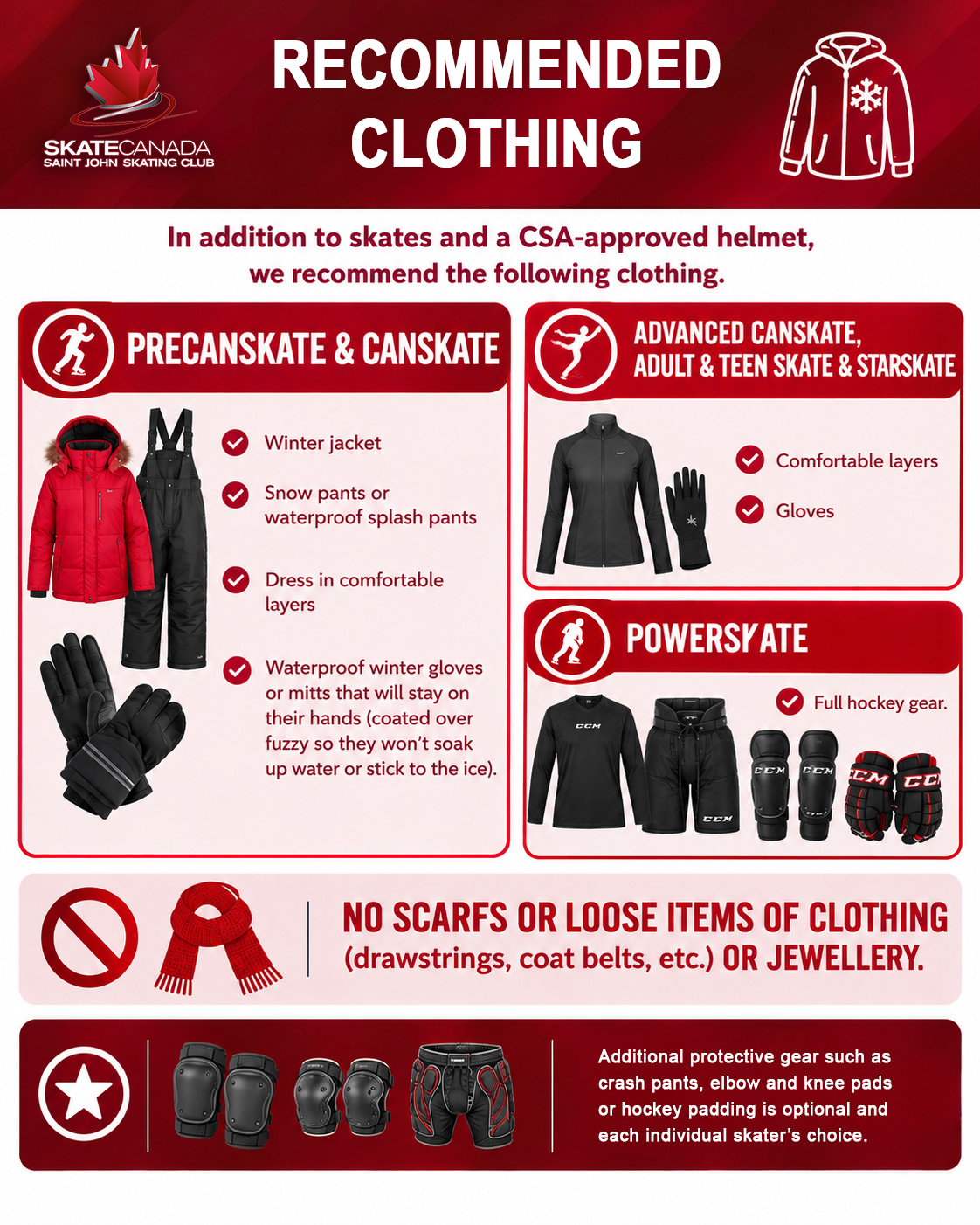
The right clothing depends somewhat on your skater’s age, experience and confidence on the ice.
Younger & Beginner Skaters
For skaters in PreCanSkate and CanSkate, we recommend dressing warmly.
We recommend:
- Snow pants
- A winter jacket or warm sweater
- Warm layers
- Mittens or gloves that stay securely on their hands
- Comfortable clothing that allows them to move freely
Why snow pants?
Beginner skaters spend a lot of time sitting, kneeling and getting back up on the ice while they learn new skills.
Snow pants help keep young skaters warm and dry during this stage of learning.
As skaters become more confident and spend less time on the ice, they may find that lighter layers provide greater freedom of movement.
Tip: Avoid clothing that is overly bulky or restrictive. Skaters need to be able to bend their knees and move their arms and legs freely.
Where Can I Buy Skates & Helmets?
Skates and CSA-approved hockey helmets are available at most sporting goods stores.
Buying New
If you’re purchasing new equipment, look for a reputable sporting goods retailer where staff can help you determine the correct size and fit.
Within Saint John, Doiron Sports Excellence is a locally owned sporting goods business, while Cleve’s Source for Sports and Sport Chek are also available as additional options.
Buying Second-Hand
Second-hand equipment can be an excellent option, especially for younger children who may quickly outgrow their skates.
Local buy-and-sell groups and online marketplaces often have quality hockey and recreational figure skates available at a fraction of the cost of new equipment.
When buying second-hand, always check that:
- The skates fit properly
- The boots provide good ankle support
- The blades are in good condition
- Laces, buckles and other fastening systems are in good working order
- The helmet is in good condition and is the correct size
Caring for Your Skates
Proper care can help your skates and blades last longer and, just as importantly, help keep them performing properly.
Dry Your Blades After Every Session
Always dry your blades thoroughly after skating.
Use a clean, dry towel to remove moisture from the blades as soon as you come off the ice. Pay attention to both the blade and the blade holder.
Once the blades have been dried, put soft soakers over the blades before placing your skates in your skate bag. Soakers help absorb any remaining moisture and protect the blades while your skates are being transported.
Never store wet skates in your bag. Moisture left on the blades can cause rust.
Let Your Skates Air Out
When you get home, take your skates out of the bag and allow them to air out completely.
Do not leave skates stored in a closed skate bag between sessions. Allowing the skates and soakers to dry fully helps prevent moisture buildup and rust.
Once everything is dry, store your skates in a cool, dry place.
Use Blade Guards When Walking
Skate blades are designed for the ice, not for walking on hard surfaces.
Figure skaters should always put hard skate guards on their blades when walking off the ice. Skate guards protect the blades from debris and surfaces that may damage or dull them.
Please note that hard skate guards are not the same as soft soakers. Soakers are designed to absorb moisture and protect the blades while your skates are being stored or transported. Soakers should never be used for walking.
Skaters with figure skates or hockey skates should walk only on the rubber mats or designated skate-walking surfaces provided at the rink whenever possible.
Never walk directly on concrete, asphalt or other hard surfaces in your skates. This can damage or dull the blades.
Watch for Rust
Even a small amount of moisture can cause skate blades to rust. If you notice rust developing on the blades, have them professionally sharpened before skating again.
Rust can affect the surface of the blade and its performance on the ice.
Keep Your Skates in Good Condition
Regularly check your skates for signs of wear or damage. Pay particular attention to:
- Loose or damaged blades or blade holders
- Damaged laces or fastening systems
- Cracks or damage to the boot
- Rust or damage to the blades
If something doesn’t look right, ask a qualified skate technician for advice before continuing to skate.
Where Can I Have My Skates Sharpened?
Regular sharpening helps keep your skates performing properly. When choosing where to have your skates sharpened, make sure the person doing the sharpening is experienced with the type of skates your skater wears.
Hockey Skates
Hockey skates can be sharpened at many local sporting goods and skate shops. If you’re unsure where to have your skates sharpened, please reach out to us and we can point you in the right direction.
Figure Skates
Figure skate blades require a different sharpening process than hockey skates. It is important to have figure skates sharpened by someone who is experienced with figure skate blades.
- Doiron Sports Excellence in Saint John has staff members who are familiar with sharpening figure skates. If you need a recommendation for someone at this location, please reach out to us and we can provide a name. Otherwise, be sure to ask for someone experienced with figure skates when dropping them off.
- Maritime Source for Sports in Moncton has a staff member with extensive experience sharpening figure skates. You can reach out to us for a name recommendation, or contact the store directly. They can let you know which staff member can help you and when they are working before you make the trip.
Not all skate sharpeners are experienced with figure skates. If your skater has figure skates, always confirm that the person sharpening them is familiar with figure skate blades before leaving them for sharpening.
Equipment by Program
Equipment needs can change as skaters progress through our programs.
PreCanSkate
Required:
- Hockey or recreational figure skates
- CSA-approved hockey helmet
Recommended:
- Snow pants
- Warm jacket or sweater
- Mittens or gloves
- Face cage
CanSkate
Required:
- Hockey or recreational figure skates
- CSA-approved hockey helmet
Recommended:
- Snow pants for newer skaters
- Warm layers
- Mittens or gloves
- Face cage for younger skaters
Advanced CanSkate
Required:
- Hockey or recreational figure skates
- CSA-approved hockey helmet
Recommended:
- Comfortable layers that allow freedom of movement
- Mittens or gloves
Adult / Teen Skate
Required:
- Hockey or recreational figure skates
- CSA-approved hockey helmet
Recommended:
- Comfortable athletic clothing
- Layers appropriate for the rink
- Gloves or mittens
StarSkate
Equipment and clothing needs may change as skaters progress into figure skating.
Skaters should have properly fitting figure skates that provide appropriate support for their level and skating goals. Comfortable skating attire that allows freedom of movement is recommended.
PowerSkate
PowerSkate is designed for hockey and ringette players looking to develop skating skills, speed and power.
Required: Participants must have the following equipment:
- Hockey skates
- CSA-approved hockey helmet
- Hockey gloves
- Hockey stick
Recommended: Hockey shin guards are recommended to help protect the legs during certain drills.
Optional: Full hockey or ringette equipment is not required, but is welcome and encouraged for participants who prefer additional protection.
Have questions about equipment for your specific program? Contact us at info@sjsc.ca and we would be happy to help!
Before You Come to the Rink
Quick Equipment Check
- Properly fitting skates
- CSA-approved hockey helmet
- Warm clothing
- Snow pants for younger/beginner skaters
- Mittens or gloves
- Face cage for younger skaters (recommended)
- Water bottle
- Skates and helmet labelled with your skater’s name
Still Have Questions?
Choosing equipment for a new skater can feel overwhelming — especially when you’re not sure what you’re looking for.
If you’re unsure about skates, helmets or what your skater should wear, please contact us at info@sjsc.ca. We’re happy to help!